
Getting Johnson County Court Records
Start with MyCase Indiana. Its Case Summary can display the CCS along with selected public documents. When a document shows no link, go to the office that keeps it. Trena McLaughlin, Johnson County Clerk of the Courts, holds Circuit and Superior Court pleadings, motions, evidence, rulings, judgments, orders, decrees, calendars, fines, costs, and fees. Franklin and Greenwood City Courts keep their own city case files.
- Identify the full case number and maintaining court through MyCase.
- Note the event date and exact document, such as an order or judgment.
- Choose online inspection, the clerk counter, phone, mail, fax, or a confirmed office email.
- State whether a plain, certified, exemplified, or transcript copy is needed.
- Ask for the current fee and delivery instructions before sending payment.
The county offers no single web form for general court copies through its Document Center. Ordinary case requests go straight to the maintaining clerk. The OJA APRA form works only for records held by the Office of Judicial Administration, so it cannot replace a request to the Johnson County Clerk. The county publishes no public terminal.
Johnson Clerk Record Channels
Visit the Clerk's counter at 5 E Jefferson Street, Franklin, IN 46131. The office phone is 317-346-4450. Posted hours are Monday through Friday, 8:00 a.m. to 4:30 p.m. For fax, the county page lists 317-738-5698. The state directory lists 317-736-3749 and PO Box 368. Call ahead before sending any time-sensitive request.
Johnson County Clerk of the Courts
5 E Jefferson Street
Franklin, IN 46131
317-346-4450
Superior Court 4 publishes D04ElectronicCopy@co.johnson.in.us for that division's copy process. That address is not a countywide mailbox. For mail, fax, or email, the safest route is whichever one the court that owns the case confirms.
Court Record Types
People say "docket" when they mean four different things. MyCase provides an online case summary. The CCS is the dated register of events. The actual pleading, motion, order, exhibit, or judgment is the filed document itself. When an official use calls for it, a certified record or transcript carries clerk or reporter certification.
- Case summaries and Chronological Case Summaries
- Pleadings, motions, notices, summonses, and returns
- Orders, judgments, decrees, and disposition records
- Public criminal, civil, family, probate, and city court material
- Reporter transcripts and available hearing records
- Historical civil, divorce, criminal, estate, and guardianship files
A MyCase printout is not automatically a certified record. Likewise, a docket entry naming a document is not the document itself, so ask the clerk for the exact item you need.
Johnson Microfilm Record Route
Not every older Johnson County court record made it into Odyssey imaging. For those, the Clerk's microfilm program is the place to look. It holds marriage applications and certificates dating to 1882, along with estates, guardianships, civil and divorce files, and criminal files. The public indexes each stop at a different point in time. Civil and divorce coverage spans 1935 through 2001, while criminal runs 1935 through 1997. Estates are indexed through 1999. Guardianships are indexed through 1994. The Johnson County microfilm page lists the historical indexes and explains how to order copies.
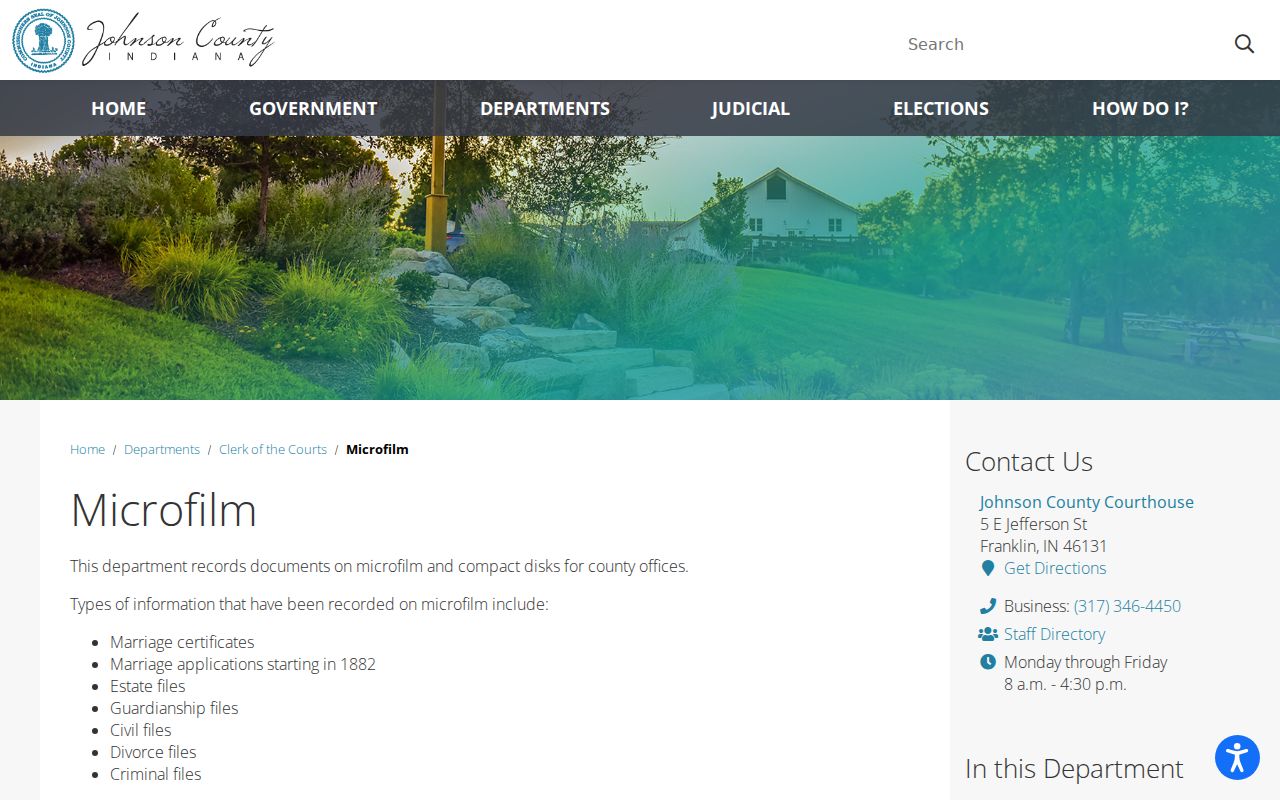
The page lists names, filing dates, cause numbers, and reel references for tracking down older material. Anything recent belongs to the Clerk's ordinary case-record process.
Inside a Johnson County Court Record
A full file can reach further than its public online view. The case header gives the style, number, court, type, flags, filed and status dates, and related references. Party blocks show public roles and counsel. Filings, hearings, results, rulings, and linked documents all appear in the CCS. Criminal records may add charges and bonds. Civil records may add service, judgments, awards, and financial rows.
| Case number | Johnson code, court, year and month, type, and sequence. |
|---|---|
| Pleadings | Complaints, petitions, answers, motions, and notices when public. |
| Orders and judgments | The signed rulings and final documents available under access rules. |
| CCS | The chronological record of events, settings, and outcomes. |
| Exhibits | Filed evidence or attachments, subject to access and imaging limits. |
| Financials | Charges, credits, payments, and balance data that may need clerk confirmation. |
A converted event may lack a scanned document. When MyCase shows no link, the document is simply not available remotely, not necessarily closed to public inspection.
Public Documents by Case Type
The Indiana document-access matrix explains which file types can appear online. Public users may see orders in many civil case types, all nonconfidential documents in miscellaneous criminal cases, final orders and judgments in criminal cases, and specified public appellate records. It promises no such thing for every pleading, exhibit, or older scan.
Authenticated parties can reach more documents in their own case with an Indiana Courts account and a unique code. Attorneys use Courts Portal. Those access levels depend on role. They do not change what the general public may see.
Fees and Certified Copies
A plain copy just reproduces the record as kept. Certification is what sets a certified copy apart, added by the Clerk. A transcript comes from the court reporter. It is prepared or copied for a specific hearing or trial. Check with the receiving office first. Pay no higher certification level than the purpose requires.
| Item | Published amount or status |
|---|---|
| Microfilm or CD document | $1 per page |
| Uncertified copy of a previously prepared transcript | $1 per page under the November 14, 2024 amendment |
| Certified transcript | $5 per page standard; up to $6.25 for emergency or short notice at judicial discretion |
| Ordinary case copy | No countywide public amount located; ask the Clerk |
| Certified order or judgment | No county public web amount located; obtain a quote |
Confirm local transcript amounts against the current rule and reporter instructions. Postage, certification, electronic delivery, and page counts can all move the quote.
Preparing a Johnson Record Request
No general form covers every Johnson County request, so build your letter from specifics. Name yourself and give contact details. Add the exact court, the case number, and the document name. Include the event date or page range you need. Say whether you want certification, how delivery should happen, and that you authorize the fees. If a deadline drives the request, state it. Ask for the public docket only when you truly need that full scope.
One state page settles the first question, which is who receives the request. The Indiana Judicial Branch request guidance sends ordinary trial-court records to the clerk. It sends transcripts to the reporter.
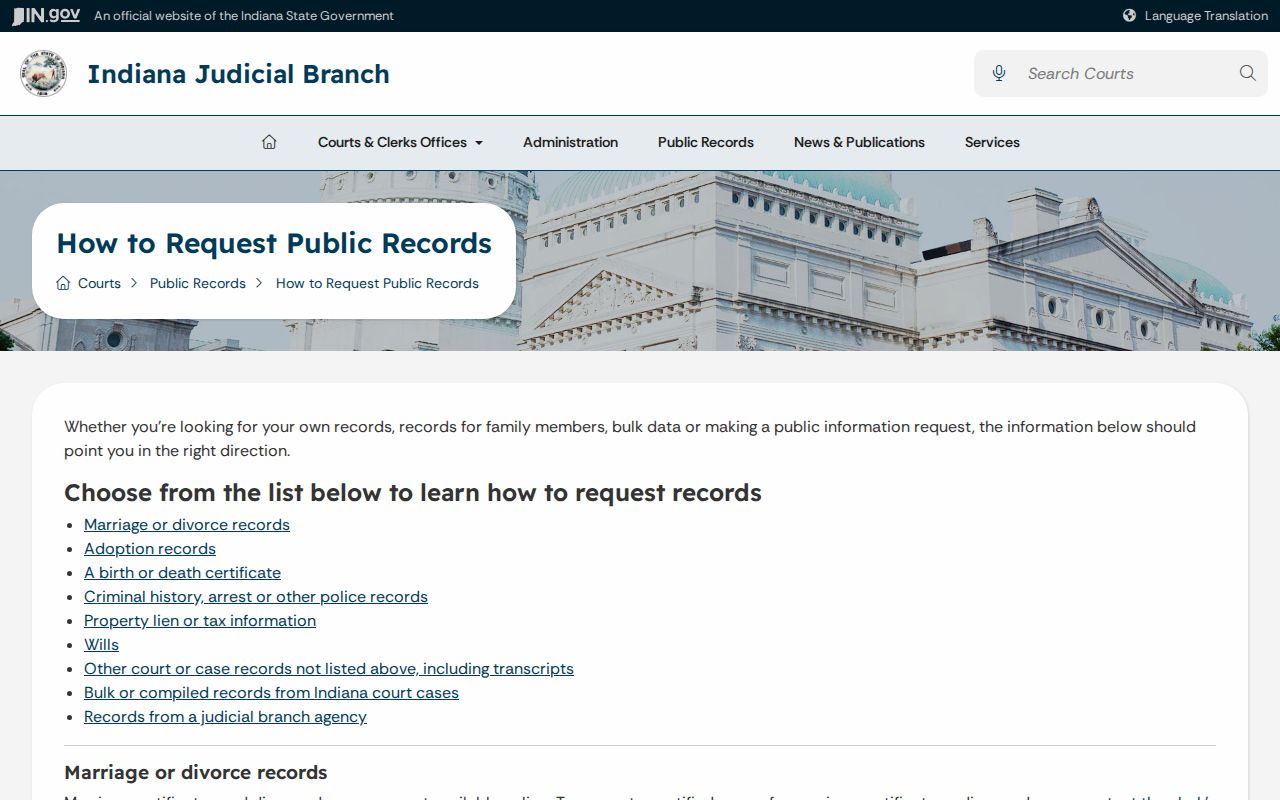
The state page helps you pick the right office. It cannot convert an OJA request into a Johnson County case-copy order. The OJA APRA request form exists only for records that OJA itself holds.
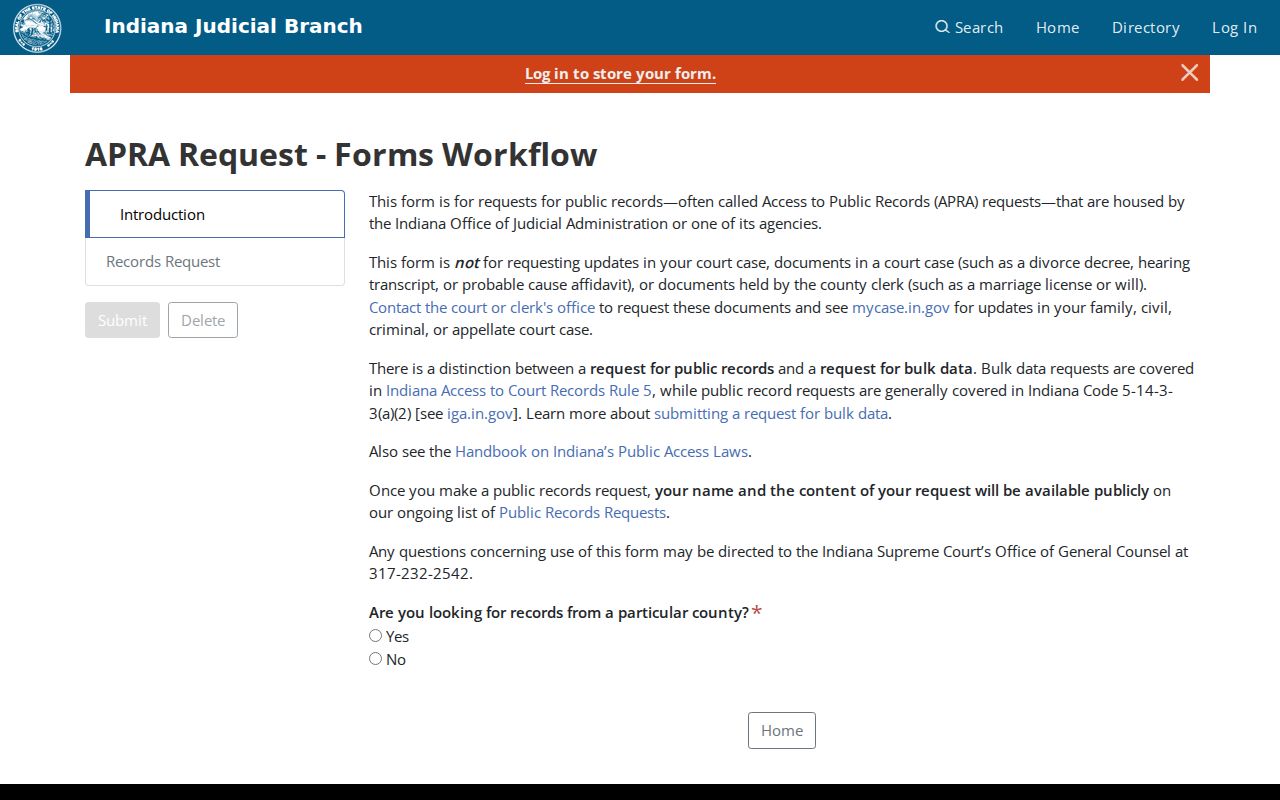
The custodian split is the point: a Johnson County case stays with its clerk. State administrative data may route to OJA instead.
Sealed Records and Public Access
Access Rule 4 presumes court records accessible unless excluded. Access Rule 5 protects personal, juvenile, confidential, sealed, and other excluded records. Access Rule 9 governs extraordinary access through a verified request, notice, possible hearing, and written order.
Key access sources: Indiana Code 5-14-3 supplies the Access to Public Records Act framework, while Indiana Supreme Court access rules govern court records and remote availability. Criminal expungement law and juvenile statutes further limit what appears.
The official access-rules index shown here collects the current Indiana court record rules.
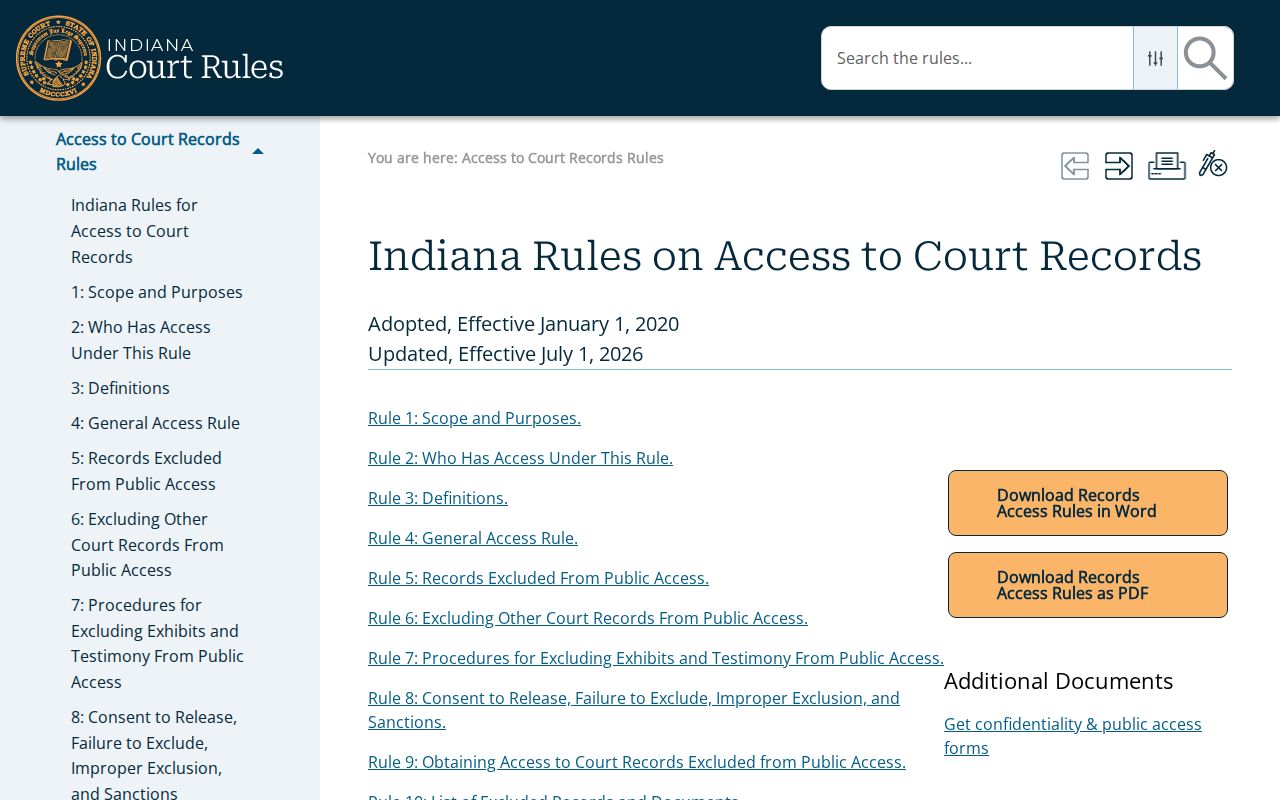
A blocked online view proves very little. The file may still sit in the clerk's vault as paper or microfilm, or it may simply not be imaged. Before assuming a record does not exist, ask whether it is confidential, sealed, or just unavailable online.
State and Federal Records Differ
A Johnson County case lives in the Indiana courts. Circuit, Superior, and city courts hold those dockets, whatever the address on the filing. A federal case tied to a Johnson County address is a different animal. The Southern District of Indiana runs on CM/ECF for filing. PACER handles public docket access. So state MyCase will not find a federal case, and PACER cannot issue a certified Johnson County state record. The Southern District comparison page spells out which system does what.
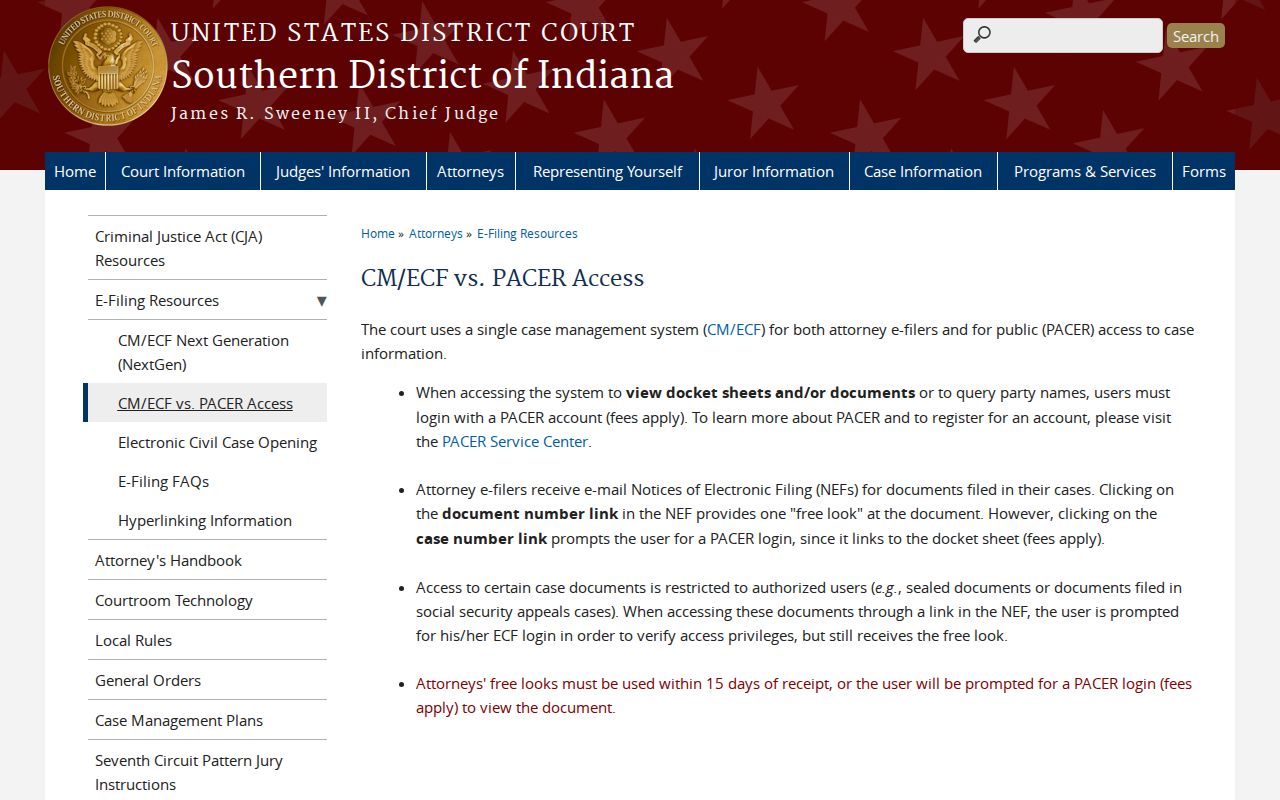
The split comes down to jurisdiction. For state trial records, go through the Johnson County Clerk. For unsealed federal dockets, PACER is the tool.
Verify Johnson County Court Records
Check any copy against the CCS entry. Confirm the case number, the court, and the event date. When the intended use demands certification, ask the clerk to certify it. Verify any displayed balance with the clerk's office before relying on it. To locate the case in the first place, start with the Johnson County case lookup.
Keep protected data to yourself unless the office asks for it through an approved channel. A public-record request only reaches records that already exist. It cannot force the Clerk to build a custom report or reach a legal conclusion. The court that maintains the record still has the final word. That word covers access, certification, fees, and delivery.